EN
EN

GRASi Comprehensive Protection Solutions for Concrete Corrosion
Values: Durable Eternity, Timeless Renewal
Protection Scope: Bridges, Tunnels, Viaducts
In the urban fabric, concrete structures serve as the skeleton of modern civilization, silently supporting our daily lives. Every bridge, tunnel, and viaduct is a crystallization of human wisdom, connecting a city’s past and future. Yet, the relentless passage of time erodes these seemingly indestructible giants. Corrosion, like a silent sculptor, carves traces of age into concrete surfaces.
Bridges
As the lifeblood of cities, bridges carry countless vehicles and pedestrians daily. Spanning rivers and seas, they endure water vapor erosion (chloride ion penetration depth reaches 1.2 mm annually); exposed to wind and rain, they withstand acid rain corrosion (200 annual wash off by pH 4.5 acid rain); and under heavy loads, they bear mechanical stress. In coastal areas, chloride ions in seawater mercilessly penetrate concrete’s capillary pores, gradually corroding internal steel reinforcement. The cracks and spalling on bridge decks, often dismissed as inevitable signs of aging, mask hidden safety hazards.
Tunnels
Urban underground tunnels face more complex environmental challenges. Groundwater seepage (120 L/㎡ annual water infiltration), acidic gases from exhaust systems (0.3 ppm SO₂ concentration), and daily temperature fluctuations (15°C average daily temperature difference) continuously erode tunnel concrete. In humid environments, white, stalactite-like crystals often form on concrete surfaces—soluble salts carried by seeping water (3.2 g/㎡ annual efflorescence), a silent warning of internal corrosion.
Viaducts
As a city’s elevated arteries, viaducts confront extreme environmental stresses. Exposed to sunlight, they endure UV radiation (5,800 MJ/㎡ annual radiation); battered by wind and rain, they face abrupt temperature changes (45 annual freeze-thaw cycles); and bathed in vehicle exhaust, they suffer carbonation (0.8 mm/year carbonation rate). Carbonation acts like an invisible blade, penetrating concrete to reduce its alkalinity and facilitate steel corrosion.
The Tianmuli Solution in Hangzhou
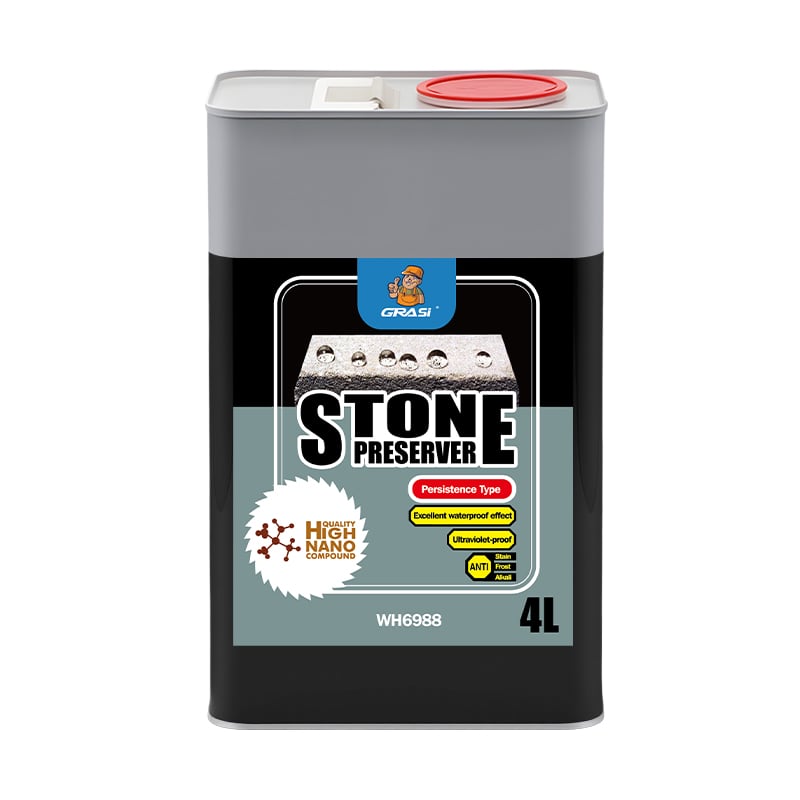
This seemingly irreversible decay found a breakthrough at Tianmuli, a fair-faced concrete complex designed by Pritzker Prize laureate Renzo Piano and built by Italy’s Dottor Group. After applying GRASi nano-penetrating protective agents:
1.Breathable Protection: Nano-level deep penetration maintains vapor permeability while protecting.
2.Enhanced Impermeability: Capillary water absorption coefficient dropped from 0.25 to 0.02 kg/(m²·h⁰·⁵) (EN 1504-2 standard).
3.Efflorescence Control: Surface white spot incidence < 0.5%, salt efflorescence reduced by 98%.
4.Carbonation Delay: Accelerated testing shows annual carbonation depth of only 0.12 mm (GB/T 50082).
5.Strength Retention: Mass loss of 0.8% after 300 freeze-thaw cycles (JTJ 270 standard).
This is not just protection for concrete structures but a pious guardianship of architectural art. When 230,000 m² of fair-faced concrete retains 98.7% of its original appearance through time, and when 0.15 mm/year carbonation depth rewrites the law of decay, we witness not just technological breakthroughs but a relentless pursuit of eternal beauty—letting every inch of concrete become a timeless artwork, and the skeleton of modern civilization remain as strong as ever.