 EN
EN

In competitive industrial and construction markets, surface protection is no longer just about appearance — it is about performance at the molecular level. nano coating has emerged as a premium solution precisely because it operates where traditional coatings cannot reach: at the particle level. This distinction is not a marketing phrase. It represents a fundamental shift in how surfaces are protected, and it explains why nano coating commands growing attention across B2B sectors including construction materials, stone fabrication, textile manufacturing, and infrastructure maintenance.
When a buyer evaluates nano coating for procurement or distribution, they are not simply comparing price or color range. They are assessing whether the product delivers measurable, durable protection that justifies the investment. Particle-level protection is the technical core that makes nano coating a genuinely defensible selling point — one backed by chemistry, not just claims. Understanding why this matters helps distributors, specifiers, and product developers communicate value with precision and confidence.
What Particle-Level Protection Actually Means in nano coating
How nano coating Penetrates at the Molecular Scale
Most conventional coatings form a film on top of a surface. This film can peel, crack, or wear away under mechanical stress, UV exposure, or moisture cycling. nano coating works differently. The active particles in nano coating are engineered at nanometer scale — typically between one and one hundred nanometers in diameter. At this size, nano coating particles can penetrate deep into the pores and microstructure of substrates such as concrete, stone, brick, and textile fibers. Rather than sitting on top, nano coating bonds within the material itself.
This penetrating mechanism means nano coating does not change the visual or tactile character of the treated surface in most applications. The surface still breathes, retains its original texture, and performs structurally as designed. What changes is its resistance to water intrusion, staining, biological growth, and chemical attack. This invisible but functional transformation is what buyers mean when they describe nano coating as offering particle-level protection.
Why the Particle Size Difference Matters for Performance
The performance gap between nano coating and standard surface treatments comes directly from particle size physics. Smaller particles access narrower capillary channels within porous materials. A nano coating formulated with true nanoscale particles can reach zones that macro-scale sealers simply bypass. This means nano coating achieves more complete coverage within the substrate, leaving fewer unprotected pathways for moisture or contaminants to travel through.
For B2B buyers, this translates into extended protection cycles and reduced reapplication costs. A surface treated with nano coating maintains its hydrophobic and oleophobic properties significantly longer than one treated with film-forming alternatives. The technical depth of nano coating coverage is what supports longer warranty periods and higher-margin positioning in professional markets.
Why Particle-Level Protection Becomes a B2B Selling Point
Addressing the Durability Expectations of Professional Buyers
B2B buyers in construction, architecture, and industrial maintenance are not swayed by surface-level product claims. They evaluate nano coating based on test data, application history, and technical documentation. Particle-level protection gives nano coating a concrete technical story. When a sales team can explain that nano coating physically integrates with the substrate rather than layering over it, the durability claim becomes verifiable and credible.
Professional buyers also consider lifecycle cost. nano coating that penetrates deeply requires fewer reapplication cycles over the life of a structure or product. For large-scale infrastructure projects, this efficiency directly reduces total maintenance expenditure. Distributors who understand the particle-level mechanism of nano coating can quantify this value and present it as a cost-reduction argument, not just a quality upgrade.
Differentiating nano coating in a Saturated Market
The surface treatment market is crowded with products that claim waterproofing and protection. nano coating stands out when its particle-level mechanism is clearly communicated. Many competing products apply silicone-based or acrylic-based films that offer temporary protection. nano coating, by contrast, creates an integrated hydrophobic matrix within the material. This structural difference is difficult for generic products to replicate and gives nano coating a durable competitive position.
For distributors and OEM partners, this differentiation supports premium pricing and category leadership. When nano coating is positioned around its particle-level science rather than just its end benefits, it attracts technically sophisticated buyers who value precision over price. This segment tends to be loyal and willing to standardize on nano coating once they have validated its performance.
Application Scenarios Where Particle-Level nano coating Delivers Maximum Value
Construction Materials and Porous Substrates
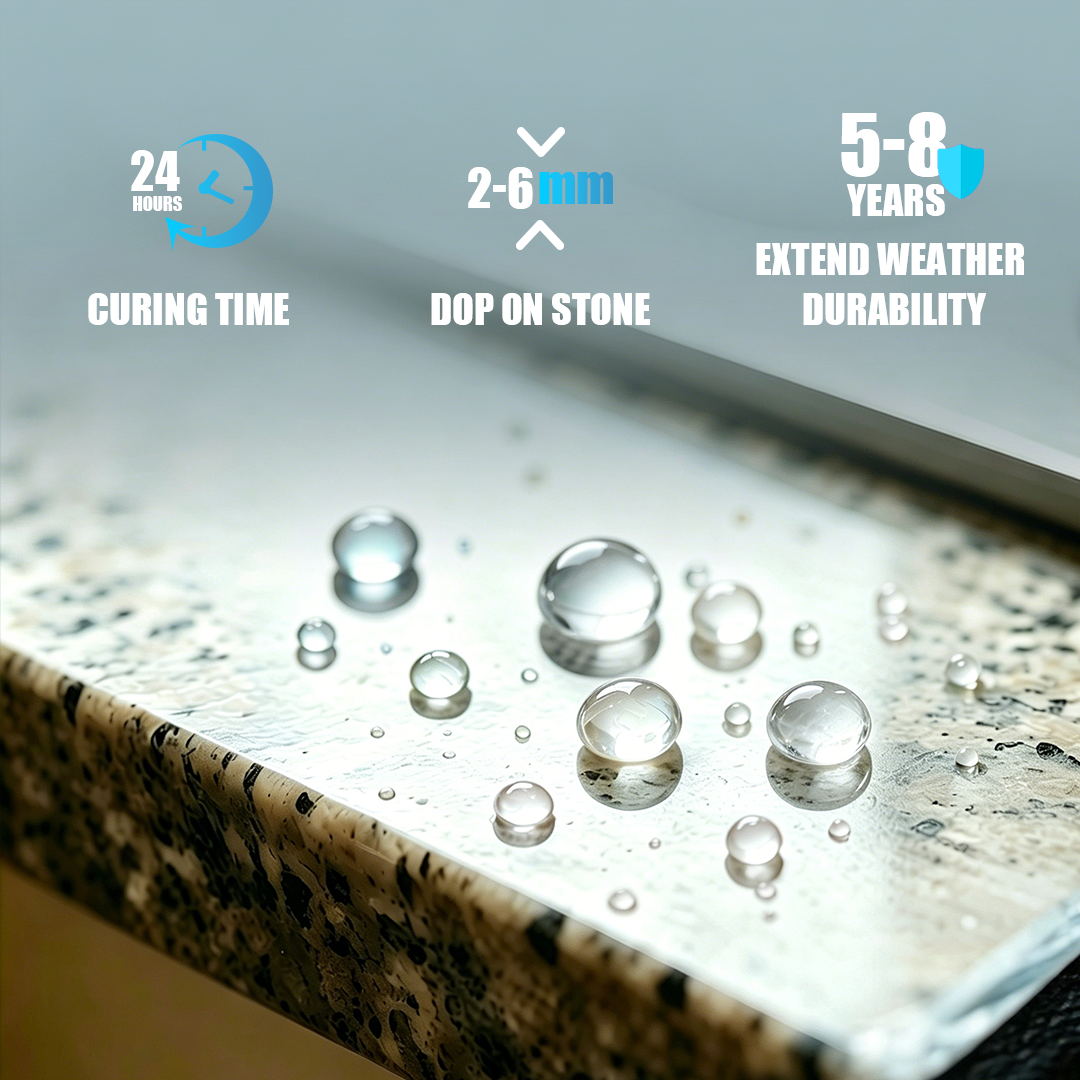
Concrete, natural stone, brick, and mortar are inherently porous. These substrates constantly interact with water, salts, and biological agents. nano coating applied to these materials penetrates the capillary network and lines the internal pore walls with a hydrophobic molecular layer. Water beads and runs off instead of absorbing in. Salt crystallization damage is reduced. Moss and mold find fewer hospitable surfaces to colonize.
For construction product manufacturers and stone processors, nano coating adds a functional premium to finished goods. Treated pavers, cladding panels, and countertops carry a verifiable performance upgrade. nano coating becomes part of the product specification, not an afterthought, and buyers recognize the added value in durability testing and field performance records.
Textiles and Industrial Fabrics
nano coating is equally relevant in technical textile markets. When nano coating is applied to fabric structures, the nanoscale particles integrate with individual fibers rather than coating the cloth surface as a whole. This preserves breathability and hand-feel while delivering water and stain resistance. For manufacturers of workwear, outdoor gear, and upholstery, nano coating provides functional differentiation that end users can feel and test.
Industrial fabric processors use nano coating to meet performance standards that traditional DWR finishes struggle to achieve over extended wash cycles. nano coating bonded at the fiber level resists degradation more effectively, giving finished products a longer active lifespan and supporting claims that matter in regulated procurement categories.
FAQ
How does particle-level nano coating differ from regular surface sealers?
Regular surface sealers form a film on top of the substrate. nano coating penetrates into the material at nanometer scale, bonding within the pore structure. This means nano coating protection is more durable, less visible, and more resistant to peeling, cracking, and wear over time.
Is nano coating suitable for both porous and non-porous surfaces?
nano coating performs best on porous substrates where its particle penetration mechanism delivers maximum benefit. For non-porous surfaces, nano coating still creates a hydrophobic molecular layer through surface bonding, though the depth of penetration is naturally limited. Application guidance should be followed for each substrate type.
What makes nano coating a defensible selling point for B2B distributors?
nano coating offers a technically verifiable performance story. Particle-level penetration, reduced reapplication cycles, and measurable hydrophobic performance give distributors concrete data points to support premium pricing. nano coating positions well against film-based competitors because its mechanism is fundamentally different and more durable under real-world conditions.